
Call Now
+91-9871108856
EMAIL US
goldyplastic10@yahoo.com
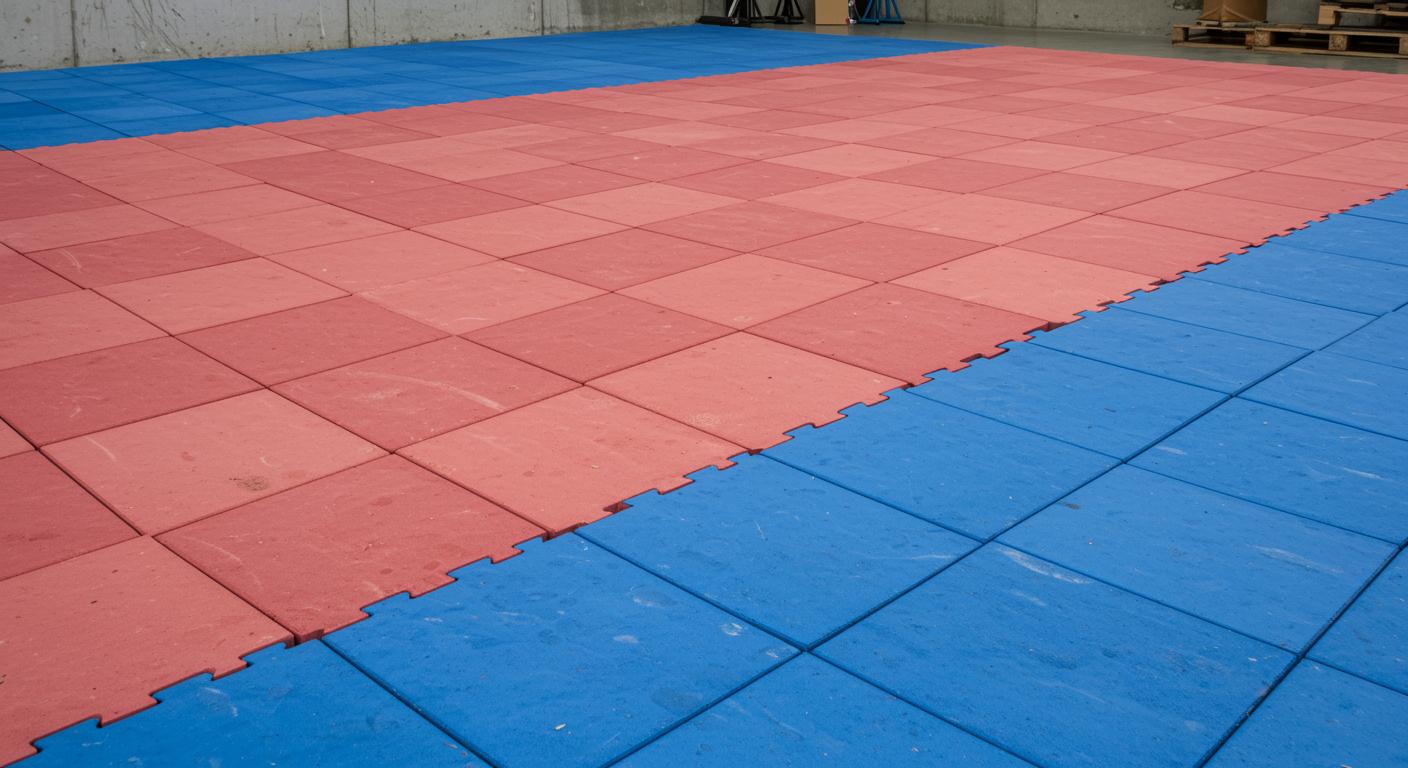
Flooring in India is a changing matter through the years, but very few people have noticed this revolutionary change. For decades, most floors in India were made of cement, ceramic tiles, marble, or wood that were considered the standard and default choices. Although these materials were functional, they were often accompanied by extended installation times, a lack of flexibility, and high maintenance costs. As lifestyles, businesses, and infrastructure needs continue to change, people's flooring expectations are also changing.
The first and foremost innovation to come back with such a great and powerful impact is PP interlocking tiles. These modular flooring systems are no longer the children of a single purpose or industry. Instead, they are being utilized in sports facilities, factories, homes, commercial interiors, and outdoor environments in such a manner that many people had never thought of them before.
Polypropylene interlocking tiles made a great comeback from those performance-driven environments to creative everyday spaces, and now they are the ones who are dictating the trend of modern flooring. Here are the Top 10 Unbelievable Utilizations of PP interlocking tiles which are to a great extent responsible for the turning of 2026 flooring trends in India.
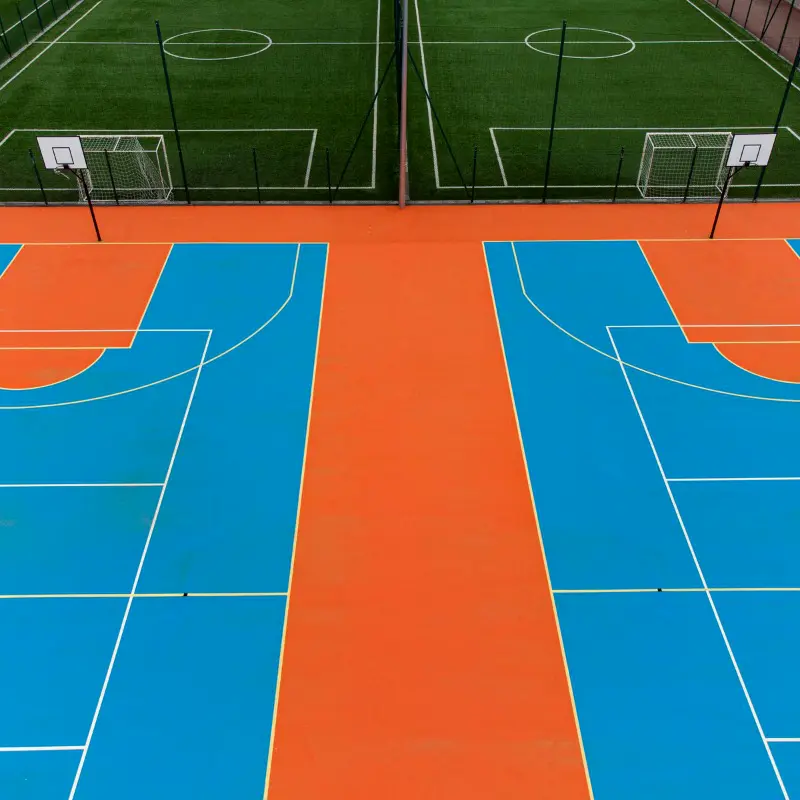
One of the most talked about and yet continuously changing applications of PP interlocking tiles is sports infrastructure. Sports flooring PP interlocking tiles have become the surface of choice for basketball, badminton, futsal, volleyball and multi-purpose courts.
The main feature that makes this use of the product so amazing is the perfect harmony of the product's functionality and its practicality. These tiles offer excellent traction, impact absorption, and uniformity of the surface, which in turn helps oxygenate the muscles and reduces the risk of injury. Besides tha,t they enable sports academies and educational institutions to carry out new installations or refurbishment works of their courts in a very short period of time, thus no downtime or closure is required.
In a nation where sports facilities are frequently utilized for various purposes, the capability to easily maintain and change the floor has made this system a long-term solution instead of a temporary one.
The industrial sector needs floors that can resist constant pressure, heavy machinery and non-stop movement. Usually, the industrial floor is a heavy-duty one, and hence long installation times and permanent fixtures that are very hard to modify later are involved.
It is here that interlocking tiles for flooring turn out to be surprisingly efficient. The main reason why warehouses and factories are opting for these tiles in large numbers is that they bring about durability without the need for permanent bonding. In the event that a section is damaged by a machine or there is a liquid spill, only that part of the floor needs to be changed.
If these are the operations whose downtime is directly proportional to productivity, then this flexibility has made modular flooring a strategic decision rather than just a choice of surface.
Garages in Indian homes are no longer considered merely vehicle parking places. Quite a few homeowners have decided to transform these spaces into home gyms, workshops, storerooms or even creative studios. PP floor tiles have been instrumental in this transformation.
These tiles are designed to resist oil stains, moisture and general wear and tear while being easy to clean. Besides being functional they also improve the aesthetics of the space thus garages are now seen as real extensions of the house rather than neglected corners.
This rising trend is a great example of how PP interlocking tiles flooring is compatible with lifestyle changes and evolving usage of space.
Children's play areas require strong safety, hygiene and durability measures. In parks, schools and residential societies, outdoor PP interlocking tiles are being installed instead of traditional outdoor surfaces.
These tiles are designed to be non-slip and water drainage friendly, which act as a preventive measure against accidents during playtime. They are also built to withstand sun and rain without flaking or becoming unfit for foot traffic.
In places where children are physically active and conditions vary frequently this flooring offers reassurance to parents, schools and facility managers alike.
Commercial interiors have evolved significantly in terms of dynamics. The retail stores, gyms, cafes, and showrooms alter their layouts very often to showcase the new branding or to satisfy the customers' expectations. Modular interlocking floor tiles are the answer to the flexibility that these places require.
By performing a partial move or exchange of selected sections businesses can avoid a complete teardown which is still possible in the case of renovations. The saved time and money allow for the floor to be a more visible and integral part of the brand experience. Flooring in this instance is a great example of how it has ceased to be merely a background element and has become an active contributor to customer perception.
One of the most unconventional uses of PP interlocking tiles is temporary events. Weddings, exhibitions, concerts and large gatherings increasingly depend on PP interlocking tiles India for quick and efficient flooring installations.
These tiles create a clean and level surface over rough ground and can be installed and removed within a short time. Event teams value their reusability while venue owners appreciate the absence of permanent surface damage. For short duration events that demand high standards, this flooring option delivers both practicality and presentation.
Trade shows and exhibitions require flooring that should be visually appealing and also reusable. To support innovative booth concepts and exhibitors are increasingly choosing PP interlocking floor tiles.
The flooring can be dismantled and reinstalled without damage allowing consistency across multiple events while maintaining budget control. Modular flooring has gradually become a core part of exhibition planning rather than an afterthought.
Corona pushed a large number of people to choose their homes as their new work spaces, gym areas and what not! This gave rise to the use of PP tiles even at your homes.
As the mounting is done without the use of adhesives or a professional, homeowners are at liberty to try different layouts and colors. This versatility is very attractive to the younger generation of homeowners who are looking for interiors that are both functional and personal.
Open gyms are now a new trend in the market. With thousands choosing to exercise in the open, the role of PP tiles in such areas has risen too. These tiles contribute in enhancing safety and also provide safety from slipping during weather conditions. This application aligns modular flooring with modern wellness trends.
One of the uses of PP tiles that cannot be neglected is their use in emergency situations like the temporary set up of camps, shelters, and other spaces. These tiles create a safe space during such set ups.
The success of PP interlocking tiles tells a story that flooring is still able to impress without being permanent. These amazing examples show how modular flooring is changing the different places of India with its flexibility, durability and creativity.
While flooring fashions keep changing, the adoption of interlocking systems is raising the bar in terms of the practical and adaptable nature of the modern surfaces that can be used for daily needs as well as exceptional situations.
They are commonly used in sports courts, homes, commercial interiors, industrial floors and outdoor areas.
Yes, they perform well in heat, rain and all other changing seasonal conditions.
Yes outdoor variants are designed with drainage and slip resistance.
No, they lock together without glue or permanent fixing.
It is best to buy from trusted manufacturers, suppliers and dealers like Goldy Plastic India.
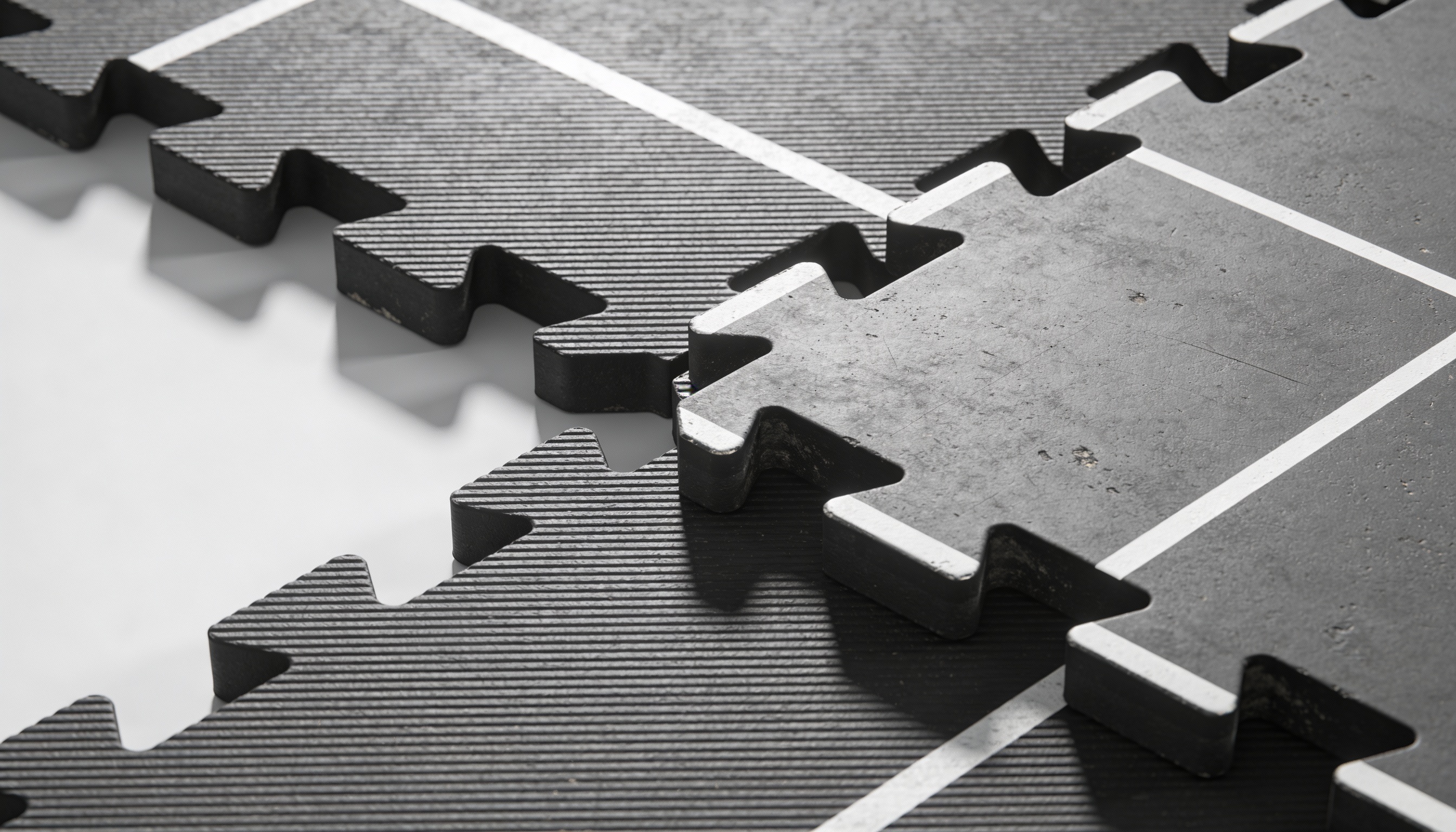
Rising demand for multi-purpose sports courts is creating high-ROI opportunities. Learn why investor
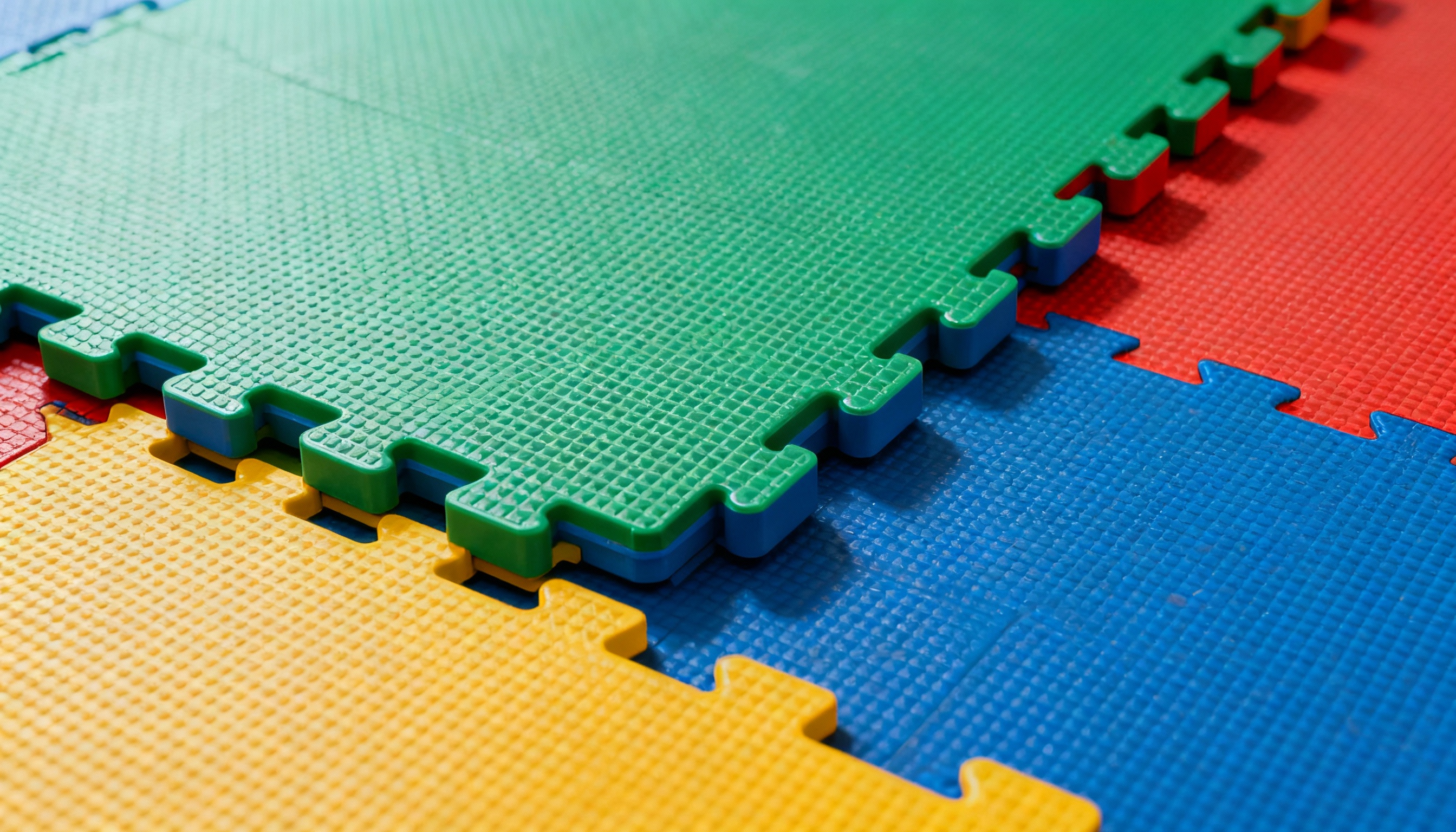
Learn everything about PP interlocking tiles, including types, uses, benefits, selection tips, and w
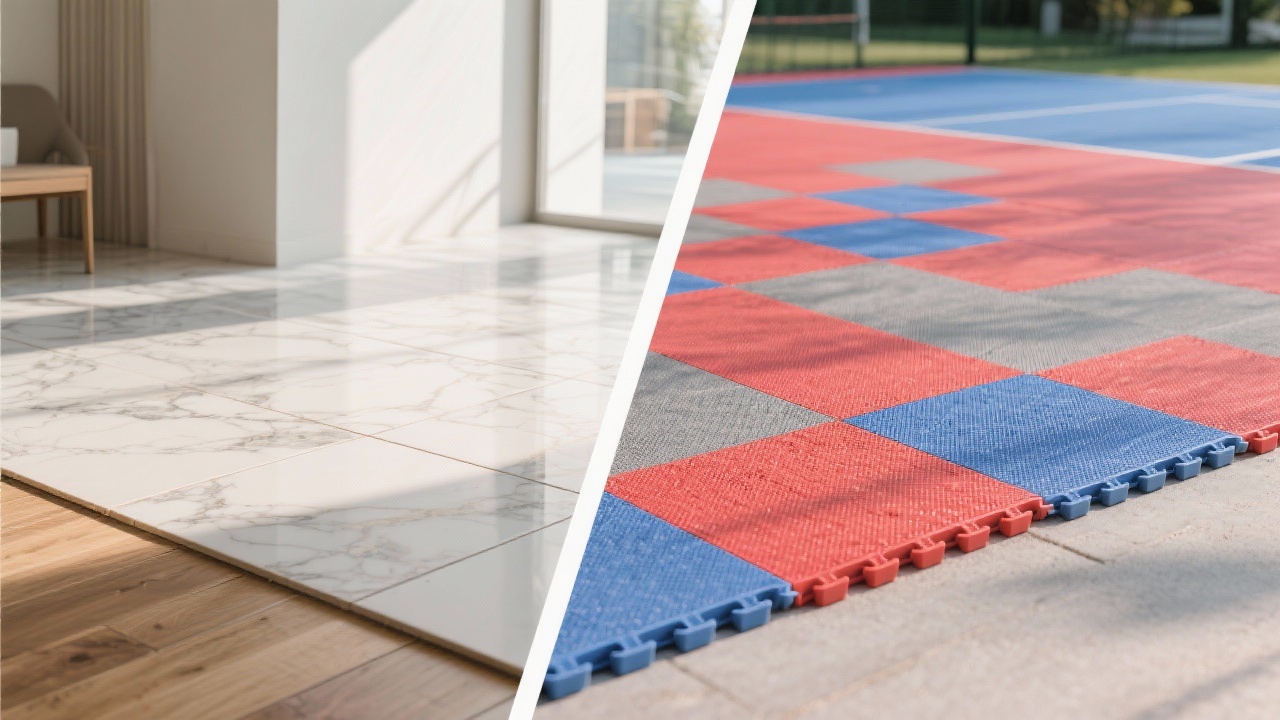
Fitting PP tiles usually takes less time – lots come with snap-together parts, need little glue, r

PP tiles are modular, snap together flooring panels made of polypropylene, a durable thermoplastic p
They are polypropylene based- a lightweight but exceptionally robust thermoplastic. This material is

With basketball court flooring evolving rapidly, PP tiles stand out as a way to build smart, spend w